AZ | EN | RU | TR

Head & Neck Surgery

Microsurgical treatment of neck cysts, salivary glands, and vocal cord problems by a Specialist ENT Surgeon.

Before consultation

About the treatment plan

PlanExamination and discussion of alternatives
DurationDepends on the extent of the procedure
RisksIndividual risk assessment
Recovery and dischargeDepends on healing, age and other illnesses
ClinicLOR Hospital, Baku

Precision in a Delicate Region

Lumps in front of the ear, under the jaw or inside the mouth are assessed. Ultrasound, selected CT/MRI and fine-needle sampling may be needed. Not every tumour requires parotidectomy; observation, different operations or cancer treatment may be appropriate. Surgery near the facial nerve carries weakness risk; monitoring does not remove it. Report rapid growth, pain or facial weakness promptly.

Key Procedure Highlights & AI Summary

Salivary gland tumours may be benign or malignant; absence of pain does not prove safety. Treatment depends on gland location, imaging and tissue findings.

Assessment considers the lump's location, duration and growth. Ultrasound, needle sampling or contrast CT/MRI are selected according to risk; not every lump needs the same operation. Suspected cancer requires multidisciplinary assessment.
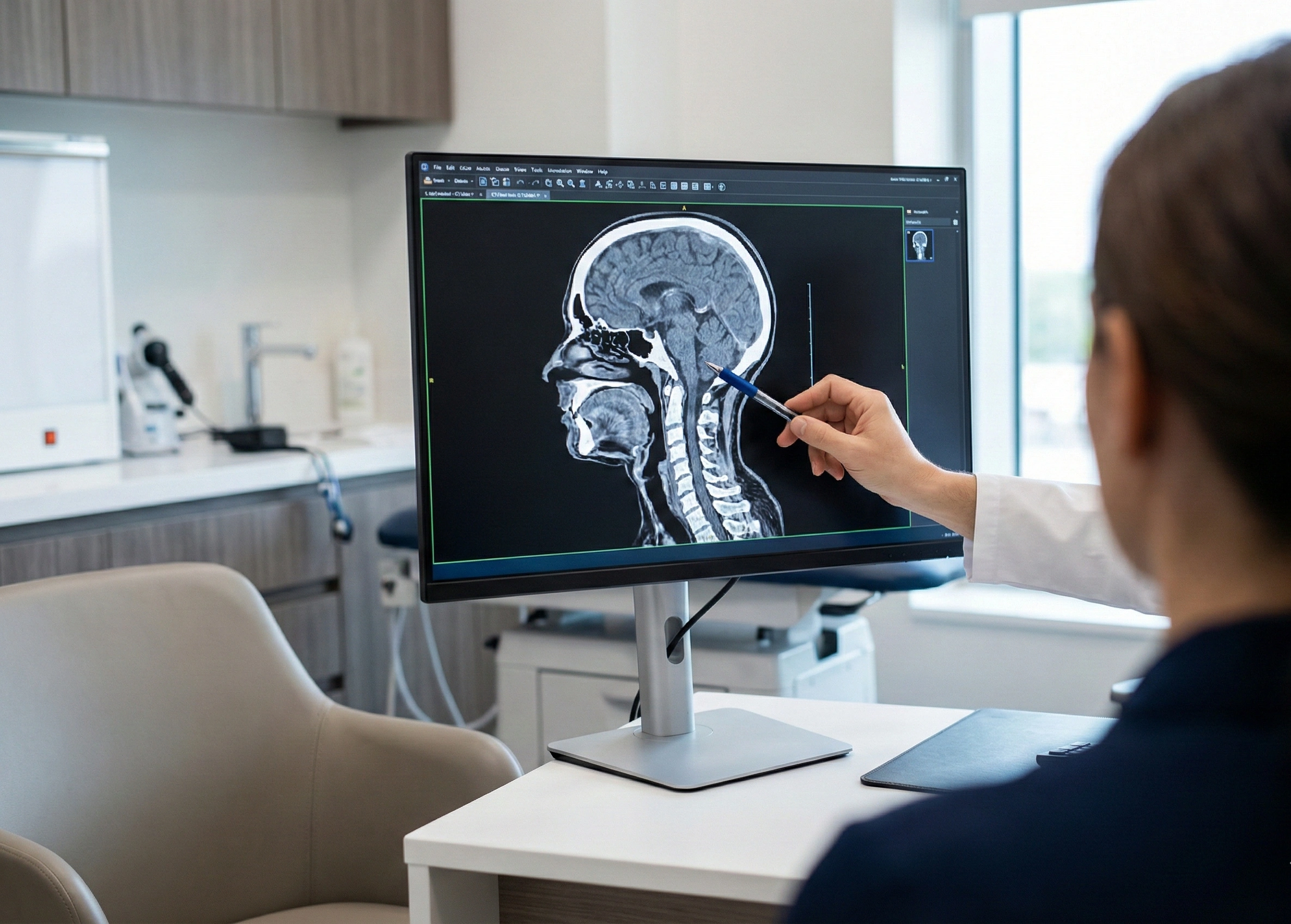
Doctor consulting with patient over head and neck scan

Our Surgical Services

Salivary Glands

Removal of parotid and submandibular gland stones, cysts, and benign tumors with facial nerve monitoring.

Neck Cysts

Aesthetic and definitive excision of thyroglossal duct and branchial cleft cysts with zero recurrence approach.

Vocal Cords (Laryngology)

Endoscopic microsurgery of vocal cord polyps, nodules, and cysts to restore clear vocal resonance.

Lymph Node Biopsy

Safe and targeted biopsy or excision of enlarged persistent cervical lymph nodes for definitive diagnosis.

Frequently Asked Questions

Neck Swelling and Lymphadenopathy: When to Worry
A neck lump can follow infection, but an adult lump lasting 2 weeks without an infectious explanation, or of uncertain duration, needs prompt assessment. This does not automatically mean cancer. Firmness, fixation, growth, weight loss, swallowing problems and voice change raise concern. The clinician examines the mouth, throat and neck; contrast imaging and fine-needle aspiration may be selected according to risk. Repeated antibiotics without bacterial signs should not delay diagnosis. Causes and assessment differ in children, taking age, general condition and lump characteristics into account.
Are Salivary Gland Tumors Dangerous?
Salivary gland tumours may be benign or malignant; absence of pain does not prove safety. Treatment depends on gland location, imaging and tissue findings. Lumps in front of the ear, under the jaw or inside the mouth are assessed. Ultrasound, selected CT/MRI and fine-needle sampling may be needed. Not every tumour requires parotidectomy; observation, different operations or cancer treatment may be appropriate. Surgery near the facial nerve carries weakness risk; monitoring does not remove it. Report rapid growth, pain or facial weakness promptly.
When is a Neck Cyst Operated On?
Surgery for a neck cyst depends on its type, symptoms and diagnostic findings. A new cystic mass in an adult should not automatically be assumed to be a benign congenital cyst. Imaging and possible fine-needle sampling help investigate malignancy. Thyroglossal and lateral neck cysts need different plans. Infection may require treatment first. Open excision is not the initial diagnostic step for every unknown mass. Recurrence, scarring, bleeding and nearby nerve or vessel risks depend on location and need discussion.
When Are Thyroid Gland Nodules Dangerous?
Most thyroid nodules are benign, but risk is not determined by size alone. Ultrasound features, TSH, symptoms and possible biopsy are considered together. A single 1–1.5 cm biopsy threshold does not apply to every nodule. Suspicious lymph nodes, appearance and clinical history change decisions. Benign nodules can still cause pressure or hormone problems. Surveillance, further tests or surgery depend on cytology and clinical context; no 100-percent cure promise applies to all cancers. Report voice change, rapid growth or swallowing and breathing difficulty.
How Do Polyps Form on the Vocal Cords?
Vocal fold polyps and nodules are different lesions. Nodules often develop on both sides with repeated vocal strain; polyps are frequently one-sided, but laryngeal assessment establishes the distinction. Voice therapy, appropriate voice use and reducing irritants are part of treatment. Surgery is selected for some polyps, not the only option for every polyp or nodule. Appearance, persistence and vocal impact guide decisions; suspicious tissue needs investigation. Postoperative voice rest is individualised. Scarring or continuing voice difficulty is possible, so zero risk to the voice cannot be promised.

Any Questions?

Book a consultation with Specialist Dr. Aysel Hasanova.

Contact via WhatsApp
Chat on WhatsApp Call Clinic